
Professional Wood & Composite Deck Cleaning
Dirt, algae, mildew, moss, pollen, and weather can leave your deck looking worn, discolored, and neglected. But cleaning a deck isn't as simple as turning up the pressure. Wood, composite, and PVC decking can respond very differently to cleaning, so the approach matters.
Hydro Shine evaluates the material and condition of your deck before choosing how to clean it. For wood decks, we generally start with gentler sodium percarbonate when the amount of organic growth allows. More aggressive growth or severely weathered wood may require a different treatment, and we'll explain the risks and options before we proceed.
Whether you're getting your deck ready for the season, preparing a wood deck for staining or sealing, or trying to get a few more years out of an aging deck, we'll recommend the cleaning approach that makes the most sense for the condition of your deck and your goals.
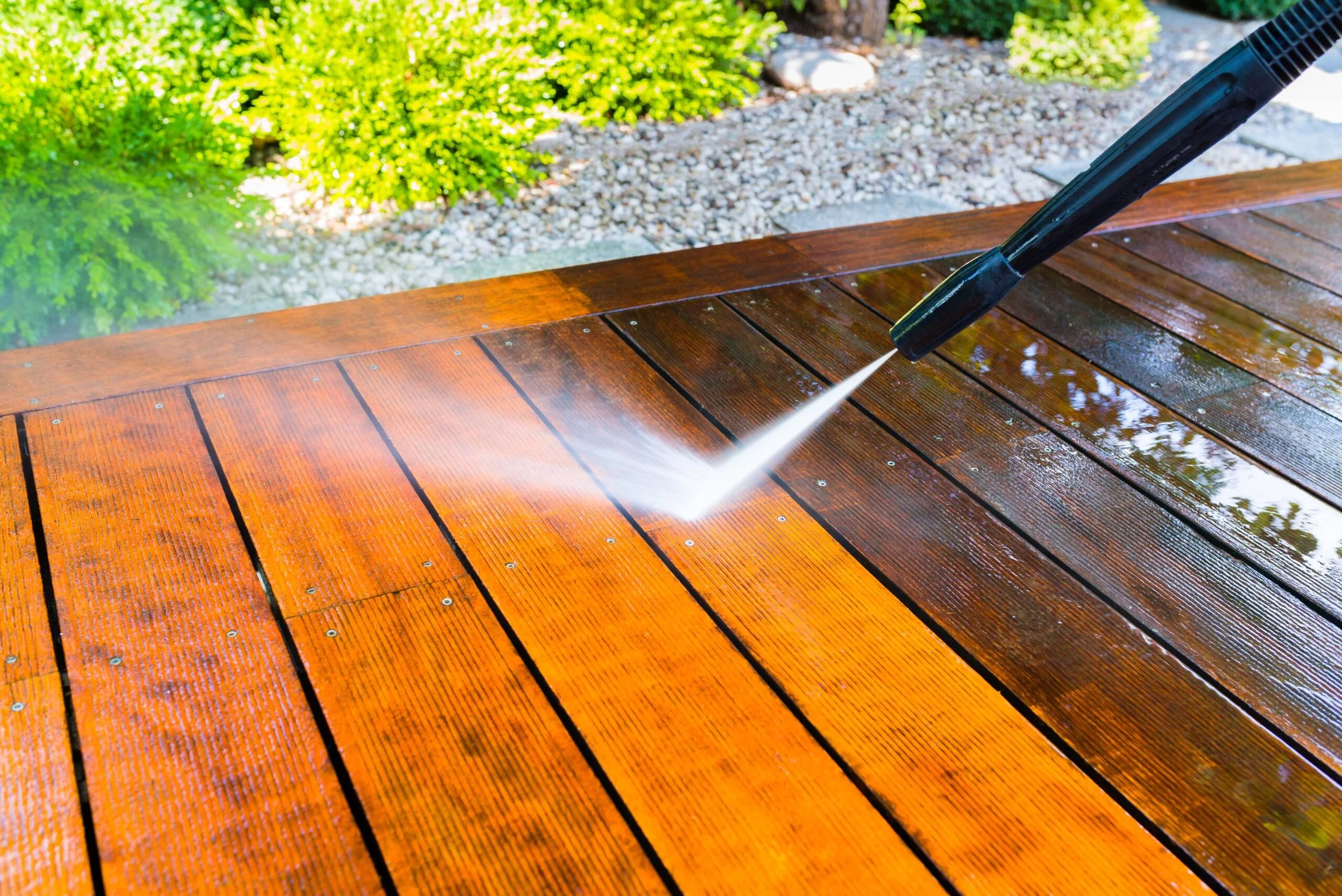
What Is Making Your Deck Look Worn?
Your deck spends all year exposed to rain, snow, sunlight, moisture, and everything else Michigan weather can throw at it. Over time, that exposure can lead to more than just a dirty-looking surface.
Dirt, Pollen & Everyday Buildup
Decks naturally collect dirt, pollen, leaves, and other debris. Foot traffic can work that buildup into the surface, leaving the deck looking dull and weathered.
Algae, Mildew & Moss
Moisture and shade can create ideal conditions for algae, mildew, and moss. Depending on the deck's condition, organic growth can discolor the surface, make it slippery when wet, and in more severe cases, grow into gaps between wood boards.
Weathered or Deteriorating Wood
Wood decking changes as it ages and is exposed to the elements. Weathering, water damage, and deterioration can leave wood gray, rough, or weakened. A deck in this condition needs to be evaluated differently from one that simply has surface dirt or light organic growth.
That's why the condition of the deck matters just as much as what's growing on it. Before we decide how to clean it, we look at the material, the condition of the surface, and what you're hoping to accomplish with the deck.
Why We Don't Clean Every Deck the Same Way
A deck isn't a driveway, and different decking materials can respond very differently to cleaning. Using too much pressure or an unnecessarily aggressive cleaning solution can damage wood fibers, change the appearance of the surface, or create problems that weren't there before.
Wood decks require the most consideration. Sodium hypochlorite (SH) can be effective against heavy organic growth, but it can also cause wood furring and bleaching. When the condition of the deck allows, we prefer to start with sodium percarbonate—often called oxygen bleach—which provides a gentler way to address light to moderate organic growth.
When a wood deck has aggressive organic growth, such as moss growing through the spaces between boards, or the wood has already been significantly weathered or deteriorated, a stronger treatment may make more sense. In those situations, we explain the potential for furring and other changes to the wood before proceeding so you can make an informed decision about the condition and goals of your deck.
Composite and PVC decking are different. These materials generally allow us to use a low-strength SH cleaning solution along with somewhat more pressure than we'd use on wood, while still keeping the pressure controlled and allowing the cleaning solution to do most of the work.
Our goal is always the same: use the least aggressive cleaning method that can effectively address the condition of the deck.
How We Clean Your Deck
1. Inspect the Deck & Determine the Material
We start by identifying what we're working with—wood, composite, PVC, or another decking material. We then assess the condition of the surface, including the amount and type of organic growth, weathering, water damage, deterioration, and any existing finish.
We also consider what you're hoping to accomplish. A relatively healthy wood deck with light algae may need a very different approach than an older, deteriorating deck where you're trying to get a few more usable years out of it.
This evaluation determines which cleaning method makes the most sense for the deck.
2. Choose the Appropriate Cleaning Treatment
For wood decks with mild to moderate organic growth, we generally start with a sodium percarbonate cleaning solution, often referred to as oxygen bleach. It provides a gentler way to clean the wood while reducing the risk of the furring and bleaching that can occur with stronger sodium hypochlorite treatments.
When a deck has more aggressive organic growth—such as moss growing through the spaces between boards—or the wood is already significantly weathered or deteriorated, a stronger sodium hypochlorite treatment may be appropriate.
Before using a stronger treatment on wood, we explain the potential for furring and changes in the appearance of the wood so you understand the tradeoff.
Composite and PVC decking are handled differently. We generally use a low-strength sodium hypochlorite solution and can use somewhat more pressure than we would on wood, while still allowing the cleaning solution to do most of the work.
3. Clean the Deck
Once the appropriate cleaning treatment has been selected, we apply it to the deck and allow it to work on the organic growth and buildup.
We then use controlled pressure appropriate for the material to rinse and clean the surface. With wood, we take particular care to avoid unnecessarily damaging the wood fibers. With composite and PVC, we can generally use somewhat more pressure while still keeping the cleaning process controlled.
4. Neutralize & Brighten Wood When Selected
For wood decks, our Deluxe cleaning option includes an oxalic acid treatment after the primary cleaning. The oxalic acid helps neutralize the cleaning treatment and brighten the wood after the organic growth and buildup have been removed.
This step is optional, which is why we offer both a Basic and Deluxe cleaning package. The Basic option focuses on cleaning the deck, while the Deluxe option adds the neutralizing and brightening treatment for customers who want a more complete wood-cleaning process.
5. Final Rinse & Evaluate the Results
After the cleaning and any selected neutralizing treatment are complete, we thoroughly rinse the deck and surrounding areas.
We then evaluate the finished surface and point out anything that cleaning could not change, such as permanent staining, significant weathering, damaged wood, or areas of deterioration.
Our goal isn't to make every deck look brand new. It's to clean the surface appropriately while being honest about what the existing condition of the deck will allow us to achieve.
What Should You Expect After Your Deck Is Cleaned?
When we're finished, your deck should look noticeably cleaner and brighter, with dirt, algae, mildew, moss, and other surface buildup removed to the extent the condition of the material allows.
The final appearance will depend heavily on the deck's age, condition, previous finishes, weathering, and the type of organic growth present. Cleaning can remove surface buildup, but it cannot reverse rotting wood, deep staining, damaged fibers, or other permanent deterioration.
Wood can also change in appearance during the cleaning process. Depending on the condition of the wood and the treatment required, some furring or color change may occur. If we determine that a stronger treatment is appropriate, we'll explain those potential effects before we begin.
If you've selected our Deluxe wood-cleaning option, the oxalic acid neutralizing and brightening treatment can help improve the appearance of the wood after cleaning. If you're planning to stain or seal the deck afterward, we'll also discuss what needs to happen before applying a new finish.
Our goal is to give you a clean, properly prepared surface while being realistic about what cleaning can—and cannot—change.
Deck Cleaning FAQs
How Much Does Deck Cleaning Cost?
1
The cost of deck cleaning depends on the size of the deck, the material, its condition, the amount of organic growth present, and the cleaning treatment required.
Wood decks may also have different pricing depending on whether you choose our Basic cleaning or Deluxe cleaning with the additional neutralizing and brightening treatment. We'll evaluate the deck and provide a straightforward estimate based on what it actually needs.
2
Yes. Cleaning is often an important first step when preparing a wood deck for a new stain or sealer.
We'll consider the condition of the wood and the type of finish you're planning to apply when determining the appropriate cleaning process. If you choose our Deluxe cleaning, the neutralizing and brightening treatment can also help prepare the appearance of the wood for its next finish.
Is Pressure Washing Safe for Wood Decks?
3
It can be, when the pressure and technique are appropriate for the condition of the wood. Too much pressure can damage wood fibers, cause furring, and leave visible marks.
That's why we don't approach every wood deck the same way. We evaluate the condition of the wood and use controlled pressure along with the appropriate cleaning treatment.
What Is the Difference Between Basic and Deluxe Deck Cleaning?
4
Our Basic deck cleaning focuses on treating the buildup and cleaning the surface.
Our Deluxe wood-deck cleaning adds an oxalic acid treatment after the primary cleaning. This helps neutralize the cleaning treatment and brighten the wood after cleaning.
The Deluxe option is particularly useful when you're looking for a more complete wood-cleaning process or preparing the deck for a future finish.
Do You Use Bleach to Clean Wood Decks?
5
Sometimes, but it isn't our first choice when the condition of the wood allows for a gentler method.
For wood decks with mild to moderate organic growth, we generally prefer sodium percarbonate, often called oxygen bleach. When organic growth is more aggressive or the condition of the wood calls for a stronger treatment, sodium hypochlorite may be appropriate.
When using a stronger treatment on wood, we explain the potential for furring and changes in appearance before proceeding.
Can You Remove Moss, Algae & Mildew From a Deck?
6
Yes. These are common reasons decks need professional cleaning.
The cleaning method depends on the amount of growth and the condition of the decking. Light to moderate organic growth on wood can often be treated with sodium percarbonate, while heavier growth may require a stronger treatment.
Can You Clean Composite Decking?
7
Yes. We clean composite decking using a different approach than we use for wood.
We generally use a low-strength sodium hypochlorite cleaning solution and controlled pressure, allowing the cleaning solution to do most of the work while using enough pressure to rinse the surface effectively.
Can You Clean My Deck Before I Stain or Seal It?
Can You Clean a Deck That Is Starting to Rot?
8
We can often clean a weathered or deteriorating deck, but cleaning won't repair rotten or structurally damaged wood.
If you're trying to get a few more usable years out of an aging deck, we can evaluate its condition and discuss the cleaning approach and potential risks. If the wood is too deteriorated to clean responsibly, we'll tell you rather than treating it as if it were in good condition.

Complete Your Outdoor Space
Your deck is one part of your home's exterior. Pair your deck cleaning with other services to give the rest of your property the same fresh, well-maintained appearance.
House Washing
Clean siding and exterior surfaces can make a freshly cleaned deck look even better. Our soft wash house cleaning process is adjusted to the surfaces and buildup present on your home.
Concrete Cleaning & Sealing
Give your patios, walkways, and other concrete surfaces the same attention as your deck. We clean concrete using professional cleaning solutions and surface-cleaning equipment, with sealing available when appropriate.
Roof Cleaning
A clean deck can still look unfinished when the roof above it is covered in black streaks, algae, moss, or lichen. Our soft wash roof cleaning process is tailored to the roofing material and type of organic growth present.
Ready to Bring Your Deck Back to Life?
If dirt, algae, mildew, moss, or weathering has taken away from the appearance of your deck, Hydro Shine can help.
We'll evaluate the material and condition of your deck, explain the cleaning options available, and recommend an approach based on what your deck actually needs and what you're hoping to accomplish.